Interior design
How to Choose an Interior Material Palette
A material palette works when its pieces support one another in the actual space. Individual samples can be attractive yet disagree in colour, texture or maintenance demands. Instead of selecting finishes room by room, build a small family of materials and test how it behaves across the main surfaces, furniture and lighting conditions.
Set a hierarchy of surfaces
Identify the surfaces that occupy the most visual space: flooring, walls, large cabinetry and curtains. These establish the background. Smaller items, such as handles, cushions and occasional tables, can introduce contrast.
Assign a role to every proposed material. If several surfaces compete to be the feature, the room may become difficult to read. A hierarchy helps you decide where to invest in a distinctive finish and where a quieter surface will support it.
Compare undertones together
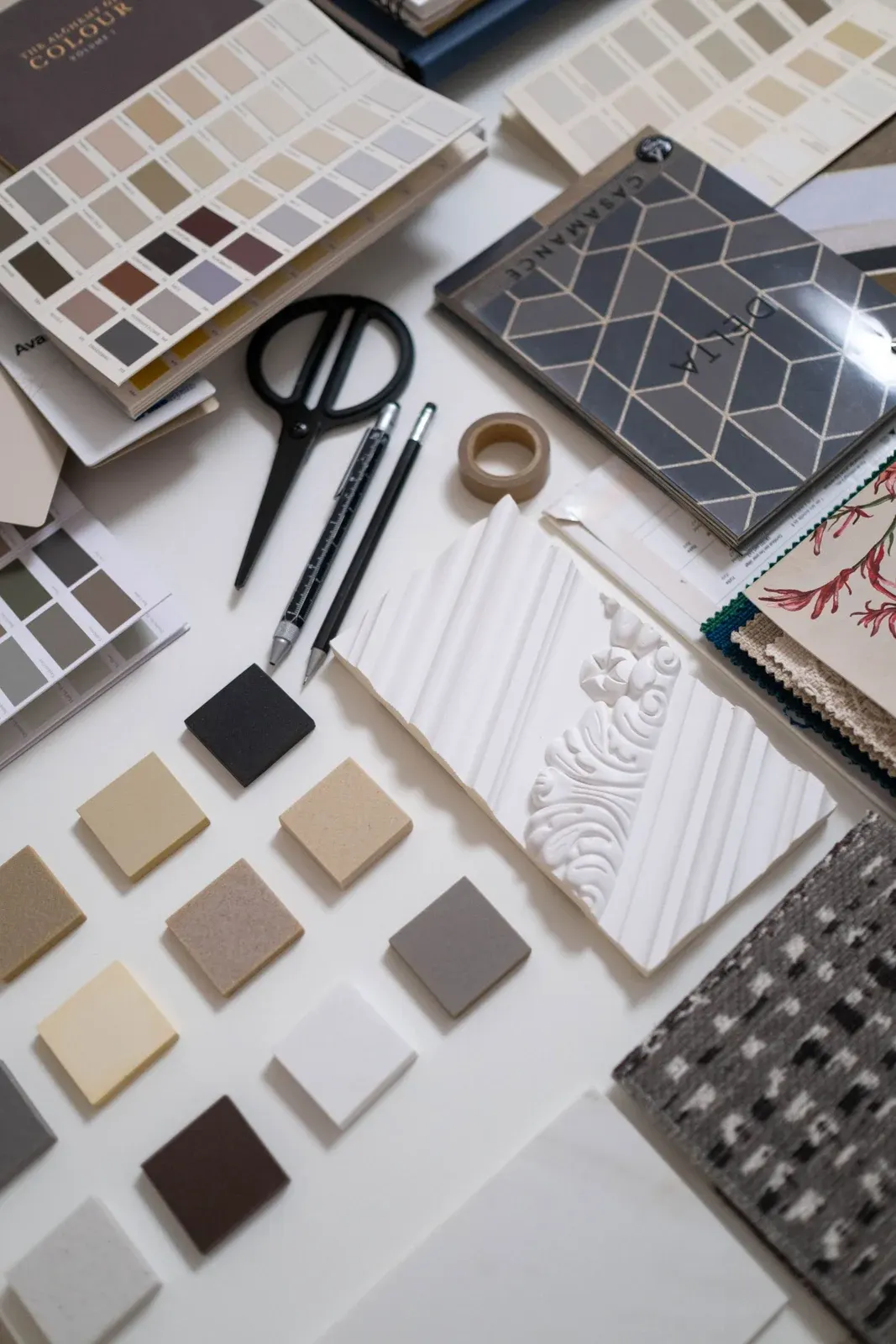
Place flooring, paint, timber, stone and fabric samples beside one another. A finish described as beige may lean pink, yellow or grey when compared with another material.
Look at the samples under the intended lighting and near the actual window. Photographs are useful records, but screens can change colour perception. When a material has significant natural variation, ask to see a larger sample or the available batch before approving it solely from a small reference piece.
Match the material to its use
A floor, worktop and decorative wall do not face the same demands. Ask suppliers about cleaning, staining, moisture exposure, repair and the installation system.
A textured surface may suit a quiet feature wall yet be inconvenient in an area requiring frequent wiping. Consider the household or business routine as well as the design. The most appropriate selection is the one whose appearance and practical demands fit the setting, rather than the most expensive material in the sample set.
Record selections before detailed coordination
Create a schedule with product names, finish references, sizes and any items still awaiting confirmation. Note where a visual reference represents a general direction rather than a specified product.
Review junctions between materials: a convincing sample palette still needs sensible transitions at doorways, corners and edges. Keep an approved alternative for items with uncertain availability. This gives the project team a basis for substitutions that preserves the design intent instead of restarting the palette under pressure.
Your review checklist
- Identify background and feature surfaces
- Compare undertones in the same light
- Check maintenance with the supplier
- Review larger samples for variable materials
- Record product references and acceptable alternatives
How many materials should a room contain?
There is no universal number. Focus on whether each material has a clear role and relates to the others. Repetition can create continuity, while a carefully placed contrast can give the space a useful focal point.
FROM READING TO YOUR OWN SPACE
Discuss your design brief.
Explore ArchiNova’s design services, or share your project location, approximate area and priorities with us.
Start a conversation ↗